

15 апреля состоялось очередное заседание студенческого научного кружка кафедры педиатрии, посвященное теме «Энурез у детей». Эта проблема остается одной из наиболее частых в практике педиатра и детского уролога, затрагивая не только физическое здоровье, но и психоэмоциональное состояние ребенка и его семьи.
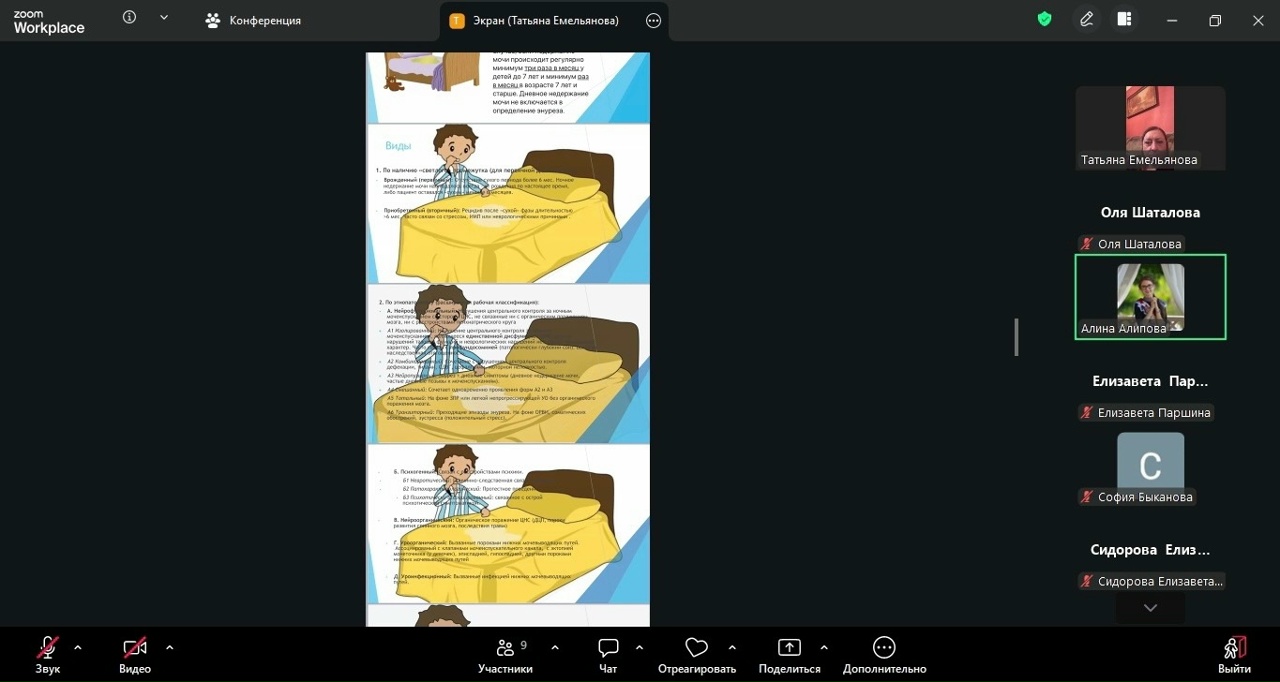
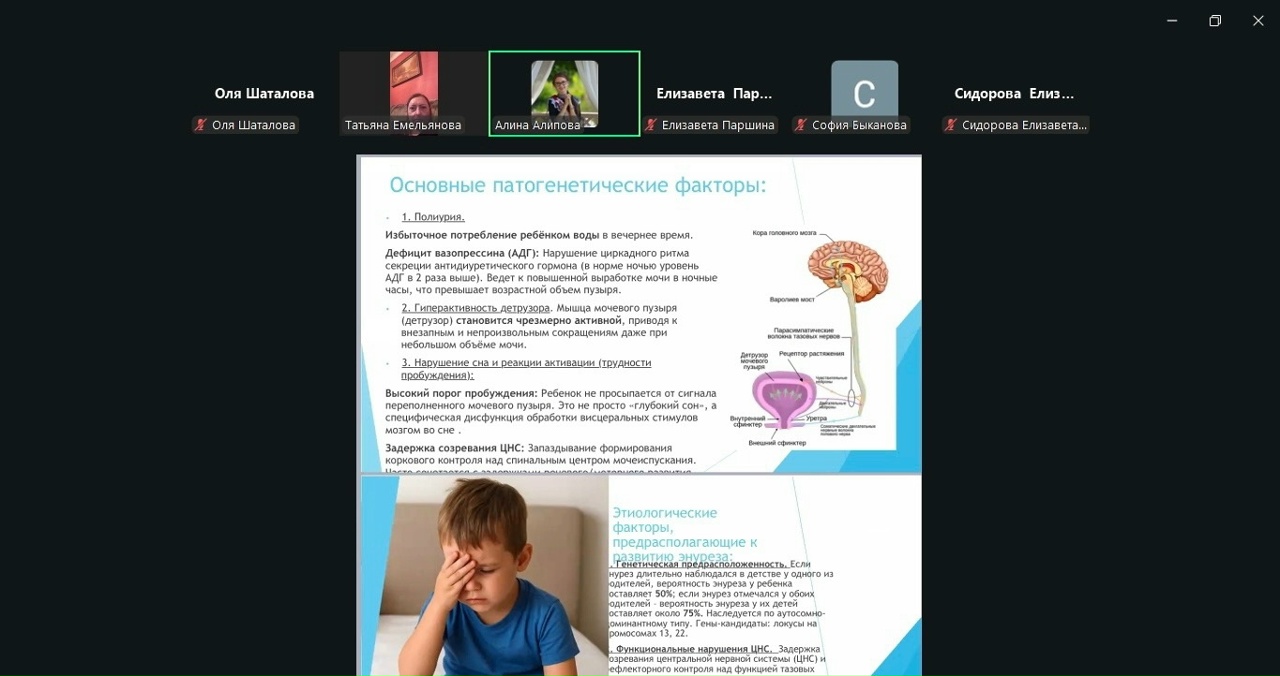
В своем докладе студентка 6 курса 5 группы педиатрического факультета Алипова А.И. подробно разобрала виды энуреза, а также ключевые причины и механизмы его развития. Слушатели узнали о роли незрелости нервной системы, генетической предрасположенности, нарушении секреции антидиуретического гормона (АДГ) и влиянии инфекций мочевыводящих путей. Важно понимать, что энурез — это не вредная привычка и не результат «лени», а состояние, требующее грамотной диагностики.
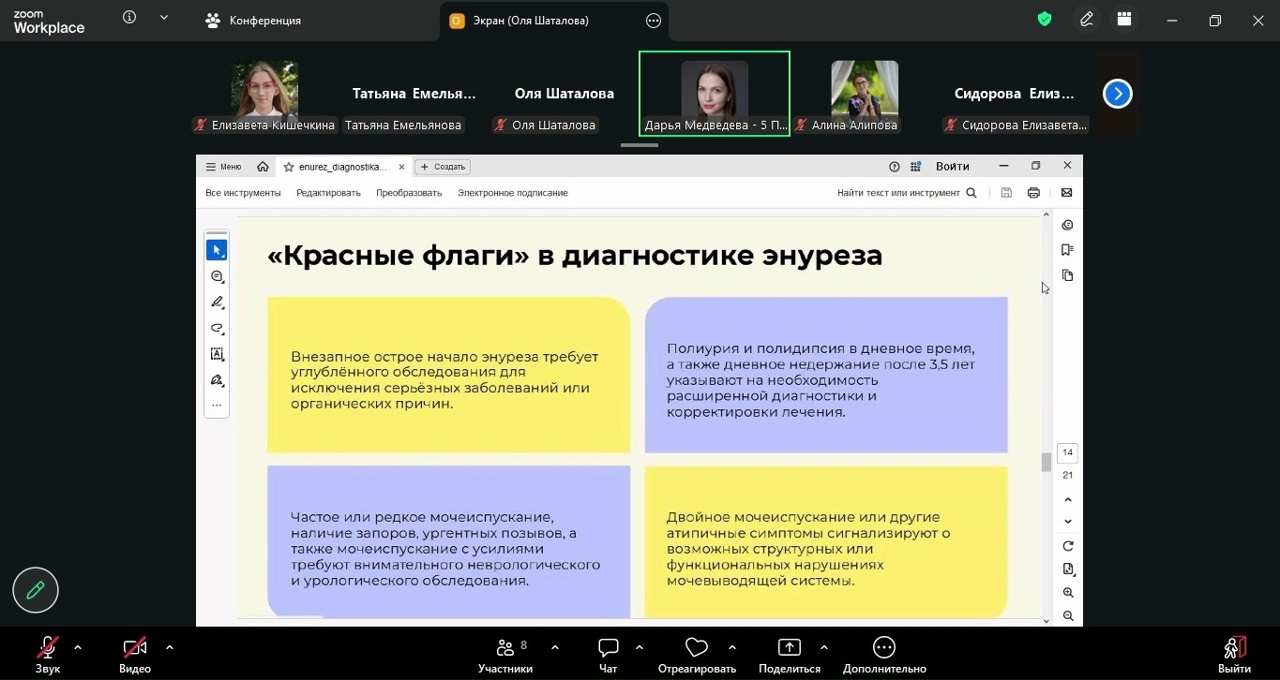
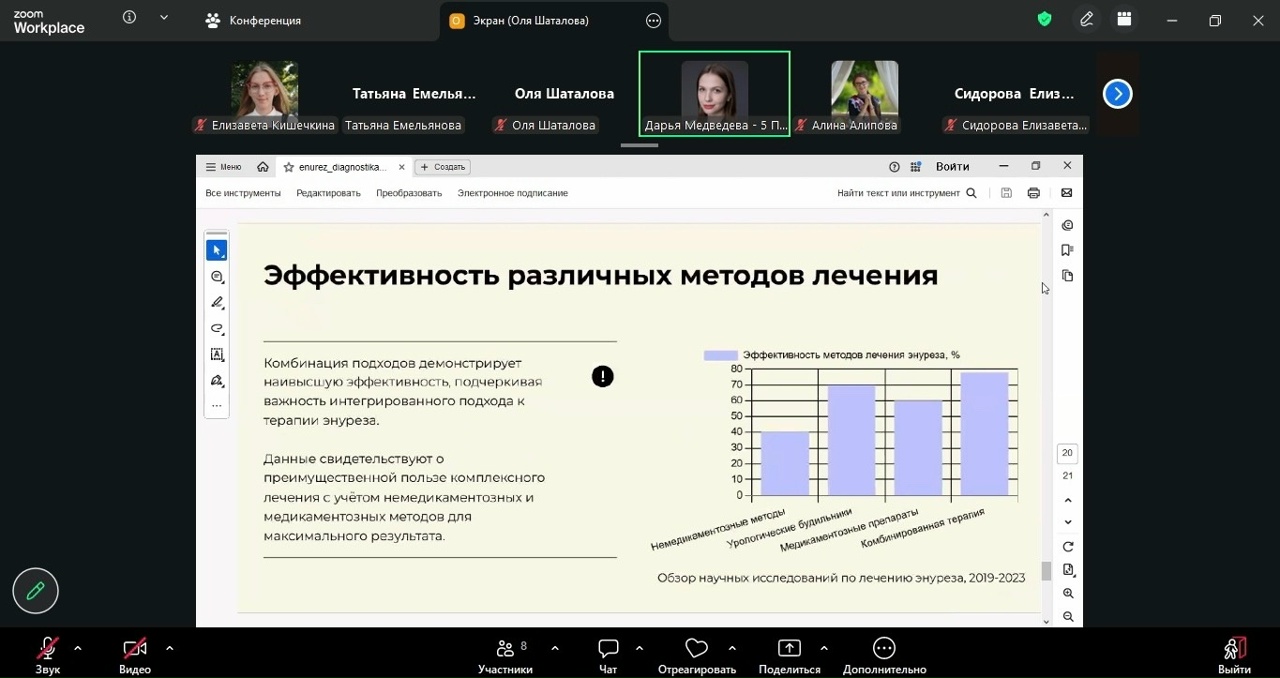
Второй доклад был посвящен практическим алгоритмам ведения таких пациентов. Студентка 5 курса 1 группы педиатрического факультета Медведева Д.Э. осветила современные подходы к диагностике и лечению энуреза у детей. Она рассказала о том, как правильно интерпретировать данные дневников мочеиспусканий, УЗИ и лабораторных исследований, а также о современных терапевтических стратегиях: от поведенческой терапии (мотивационные программы, «мочевые будильники») до фармакологической коррекции (десмопрессин, антихолинергические препараты). Отдельное внимание было уделено алгоритму выбора тактики в зависимости от формы заболевания и возраста пациента.
Ответственный преподаватель заседания — к.м.н., доцент кафедры педиатрии Емельянова Т.А. — отметила высокий уровень подготовки докладчиков и подчеркнула важность междисциплинарного подхода.
Благодарим всех, кто присоединился к заседанию!
On April 15, another meeting of the student scientific circle of the Department of Pediatrics was held, dedicated to the topic of "Enuresis in Children." This issue remains one of the most common in the practice of pediatricians and pediatric urologists, affecting not only the physical health but also the psycho-emotional state of the child and their family.
In her presentation, sixth-year student A.I. Alipova from Group 5 of the Pediatric Faculty thoroughly examined the types of enuresis, as well as the key causes and mechanisms behind its development. The audience learned about the role of nervous system immaturity, genetic predisposition, disruption of antidiuretic hormone (ADH) secretion, and the impact of urinary tract infections. It is important to understand that enuresis is not a bad habit or a result of "laziness," but rather a condition that requires proper diagnosis.
The second presentation focused on practical algorithms for managing such patients. Fifth-year student D.E. Medvedeva from Group 1 of the Pediatric Faculty highlighted modern approaches to the diagnosis and treatment of enuresis in children. She discussed how to correctly interpret data from voiding diaries, ultrasounds, and laboratory tests, as well as contemporary therapeutic strategies ranging from behavioral therapy (motivational programs, "urinary alarm clock") to pharmacological correction (desmopressin, anticholinergic medications). Special attention was given to the algorithm for selecting tactics based on the form of the disease and the age of the patient.
The responsible instructor for the meeting, Ph.D., associate professor of the department of pediatrics T.A. Emelyanova, noted the high level of preparation of the presenters and emphasized the importance of an interdisciplinary approach.
We thank everyone who joined the meeting!
- Все новости22806
- Поступающим441
- Образование3426
- Наука3303
- Общество3182
- Университетская жизнь5599
- Медицина1269
- Трудоустройство540
- Непрерывное образование78
- Международная деятельность389
Информационные рубрики
Главный корпус
+7(4712)588-137
305041 К.Маркса,3, г.Курск
kurskmed@mail.ru
Приемная комиссия
74-50-48
305041 К.Маркса,3, г.Курск